

"Education is the most powerful weapon which we can use to change the world”
- Nelson Mandela -

For four years, Teach For Lebanon (TFL) has been steadily investing in climate education, starting with the basics of climate literacy and classroom integration and gradually building toward climate leadership. That work continued even through some of Lebanon's most difficult periods of national crisis and instability. Over time, TFL's climate education work has expanded in both scale and depth. What began as an effort to strengthen climate literacy has evolved into a comprehensive approach that equips educators with the knowledge, tools, and opportunities to integrate climate education into their teaching while empowering students to lead environmental action in their schools and communities.
This work is organized around four interconnected pillars: building and strengthening climate education resources, building Fellow and educator capacity, launching structured climate education engagement spaces, and designing and implementing school-based climate action projects with community involvement. Together, these pillars create a continuum from climate learning to climate leadership. This article focuses on the first pillar—building and strengthening climate education resources highlighting how TFL has developed practical, contextually relevant tools that enable educators to integrate climate education into their teaching and inspire students to engage with environmental challenges in meaningful ways.
With support from the Ipsos Fund, this work took a significant step forward. The funding helped develop and consolidate resources that are practical, curriculum-aligned, and relevant to the realities of Lebanese classrooms.
To make these resources easier to access and use over the long term, they were later brought together on a dedicated Climate Education website, a digital hub for teachers across Lebanon.
🔗 Access the Climate Education platform: https://cel.teachforlebanon.org/
Resources Developed by the Fellows Themselves
At the core of this work are interdisciplinary resources developed by Teach For Lebanon Fellows, designed to make climate education more accessible, practical, and adaptable for teachers across different grade levels and subjects. Rather than treating climate as a separate subject, Fellows embedded it into core subjects and existing curriculum structures, so teachers could integrate environmental learning without adding to their workload.
For Cycle 1 and Cycle 2 (Grades 1–6), Fellows developed resources that integrate climate education into core subjects and match the Lebanese Curriculum Competencies such as English, Mathematics, and Science. These materials are built to fit easily into existing lesson plans, letting teachers introduce climate concepts while keeping curriculum progression on track.
For Cycle 3 and beyond (Grades 6–9 and Grades 10–12), Fellows created a project-based learning booklet. It includes structured project ideas that encourage students to explore real-world environmental challenges through inquiry, collaboration, and creative problem-solving. Working with older learners called for a different approach, shifting from cross-curricular integration to structured project implementation, where students take greater ownership of their learning. The booklet is organized around three levels of project implementation—classroom-level projects, school-level projects, and community-level projects—providing a progression from small-scale classroom initiatives to broader actions that engage the wider community. This progression supports deeper climate understanding as well as the development of climate leadership skills, as students design and carry out projects that respond to environmental issues in meaningful, applied ways.
Together, these resources form a progressive learning pathway, from early awareness to deeper, more critical engagement with climate issues as students grow older.
From Classroom Resources to a Digital Platform
To maximize accessibility and impact, all Fellow-developed climate education resources, created with support from the Climate Education Leadership Fund by Teach For All, were consolidated into the Climate Education website.
The platform serves as a centralized digital repository, bringing these interdisciplinary materials together in one accessible space. It allows teachers to explore, download, and use ready-made resources aligned with the national curriculum.
Through this, individual classroom innovations developed by Fellows have been scaled into a resource that supports more consistent climate education delivery across schools in Lebanon.
Expanding Access
The TFL’s Climate Education website strengthens access to high-quality, locally developed teaching resources. By bringing all materials into one centralized hub, it reduces barriers for teachers and supports more consistent implementation across classrooms.
The platform also encourages collaboration and resource sharing among educators, contributing to a growing community of practice around climate education in Lebanon.
Looking Ahead
As climate challenges continue to shape communities in Lebanon and globally, equipping students with the knowledge and skills to respond is increasingly important. This initiative supports teachers in playing a central role in that process by embedding climate education into daily classroom learning.
Through this digital platform, Teach For Lebanon aims to contribute to a generation of learners who are informed, engaged, and empowered to take action toward a more sustainable future. In Lebanon's context, it also serves as a tool for community recovery by embedding climate leadership into teacher practice and student learning.
By fostering hope, strengthening environmental awareness, and building the capacities of young leaders, the initiative helps empower communities to rebuild with resilience and work toward a more sustainable future.
🔗 Access the Climate Education platform: https://cel.teachforlebanon.org/
The educational resources mentioned in this article were developed and contributed by Teach For Lebanon Fellows from Cohorts 16 and 17: Rayan Webhi, Lama Abi Farraj, Lea Saleh, Sarah Siblini, Imane Jawhar, Esraa Karroum, Wafaa Al Hamra, Raghad Farhat, Hamsa Abu Salhab, Judy Al Kass, Reem Youssof, Oussama Noun, and Hasan Abou Elewa. Their dedication and creativity helped bring these resources to life and support meaningful learning experiences for students.
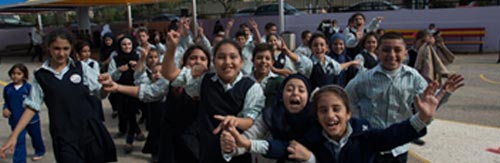
Number of fellows: 1
students: 600
refugees: 600
"Education is the most powerful weapon which we can use to change the world”
- Nelson Mandela -